
Déco Maison
Design Sprint
Category :
Interior Design / Augmented Reality (AR) / Agile UX
Role :
UX / UI Designer
Timeline :
February 2021,
February 2021,
5 Days
Updated :
June 2026
Delivery :
Interaction Design, Prototyping
The
Problem
Relocating to a new city comes with enough pressure—decorating a new home shouldn't add to it. Yet online furniture shopping often leaves customers second-guessing whether a piece will fit their space, style, or expectations. The result always end the same way, "Why did I buy this?" The challenge is to reduce the uncertainty for customers to make faster, more confident decisions in decorating their homes with a more intuitive journey.
The Solution
Meet Déco Maison—where "I hope this fits" becomes "I know it does."
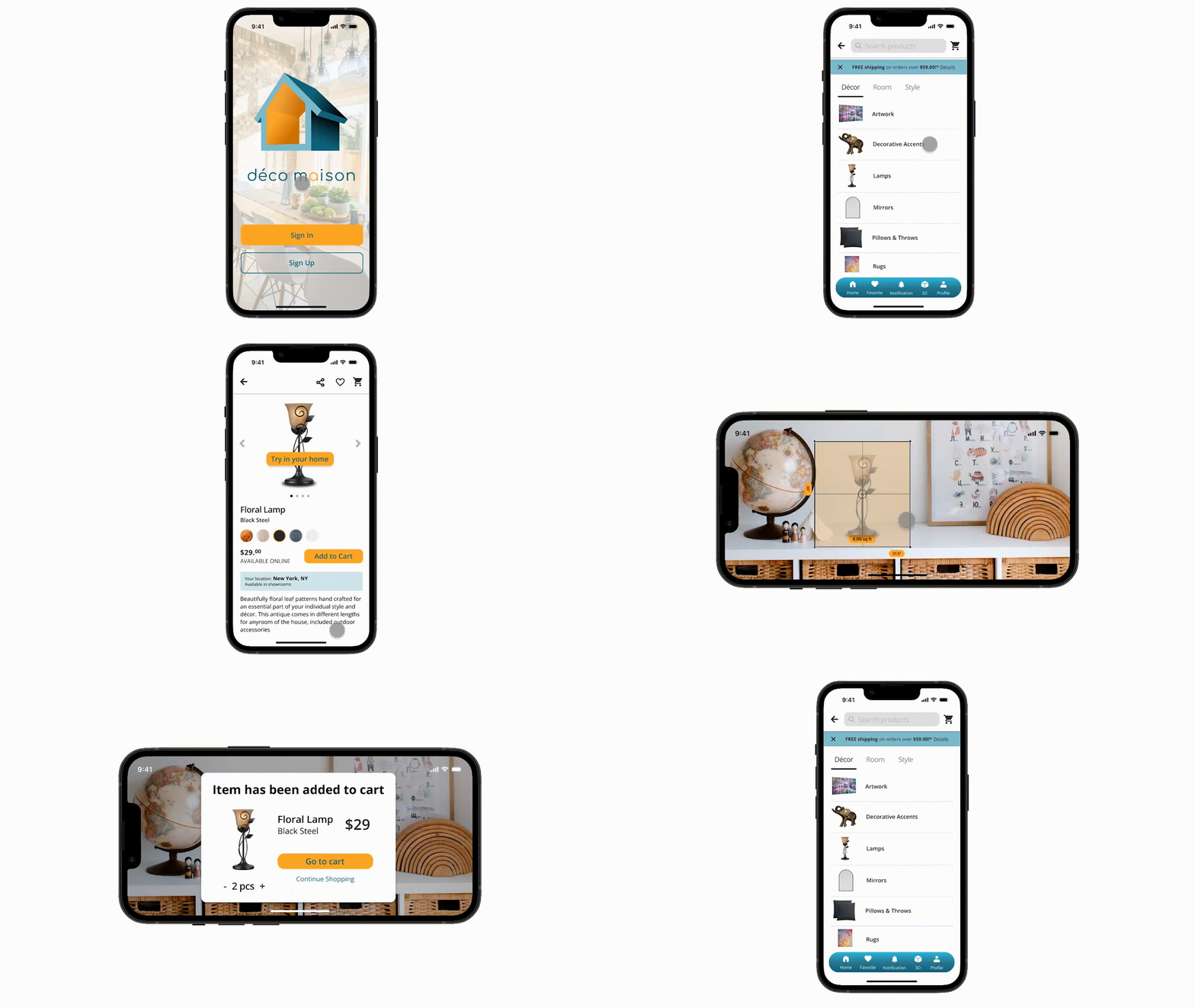
Déco Maison bridges the gap between interior design and augmented reality, replacing guesswork with confidence. Instead of imagining how a sofa, lamp, or dining table might look, users can virtually scale and place curated furniture directly within their own living space. The experience blends personalized interior design with AR, allowing users to see how each piece complements their home's dimensions, layout, and aesthetic before committing to a purchase.
The result? Fewer "What was I thinking?" purchases, fewer returns, and more time enjoying a beautifully designed home instead of wrestling with a measuring tape. By making e-commerce feel tangible, Déco Maison turns decorating into a fun experience users can trust.
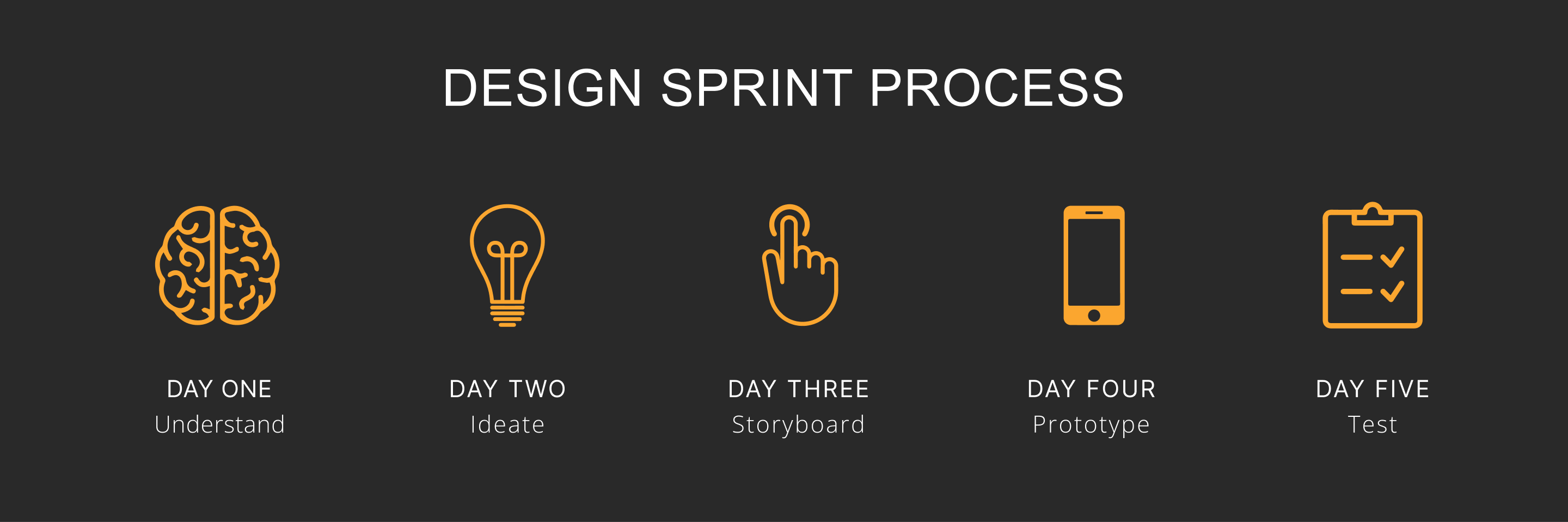
Day 1: Understand the User
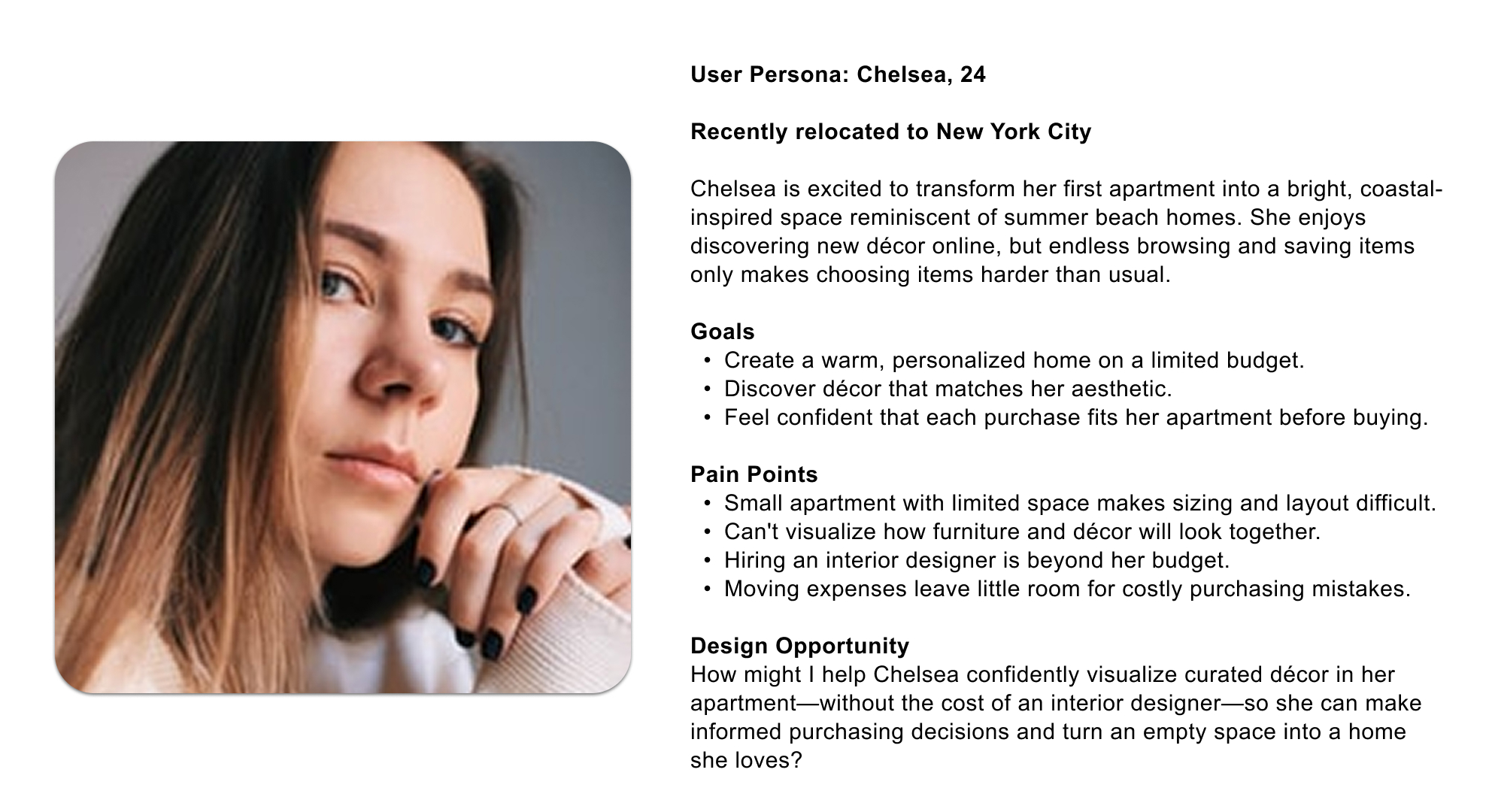
The first step was understanding who I was designing for. By analyzing Chelsea's persona, I identified that her biggest challenge wasn't finding furniture—it was making confident decisions. Between limited space, budget constraints, and an inability to visualize how pieces would fit together, she faced decision fatigue long before reaching checkout. These insights established a clear design direction: create an experience that reduces uncertainty, simplifies decision-making, and empower her to confidently personalize her new home through augmented reality.
Day 2: Ideate the Journey
With Chelsea's needs clearly defined, the next step was translating insights into a seamless experience.
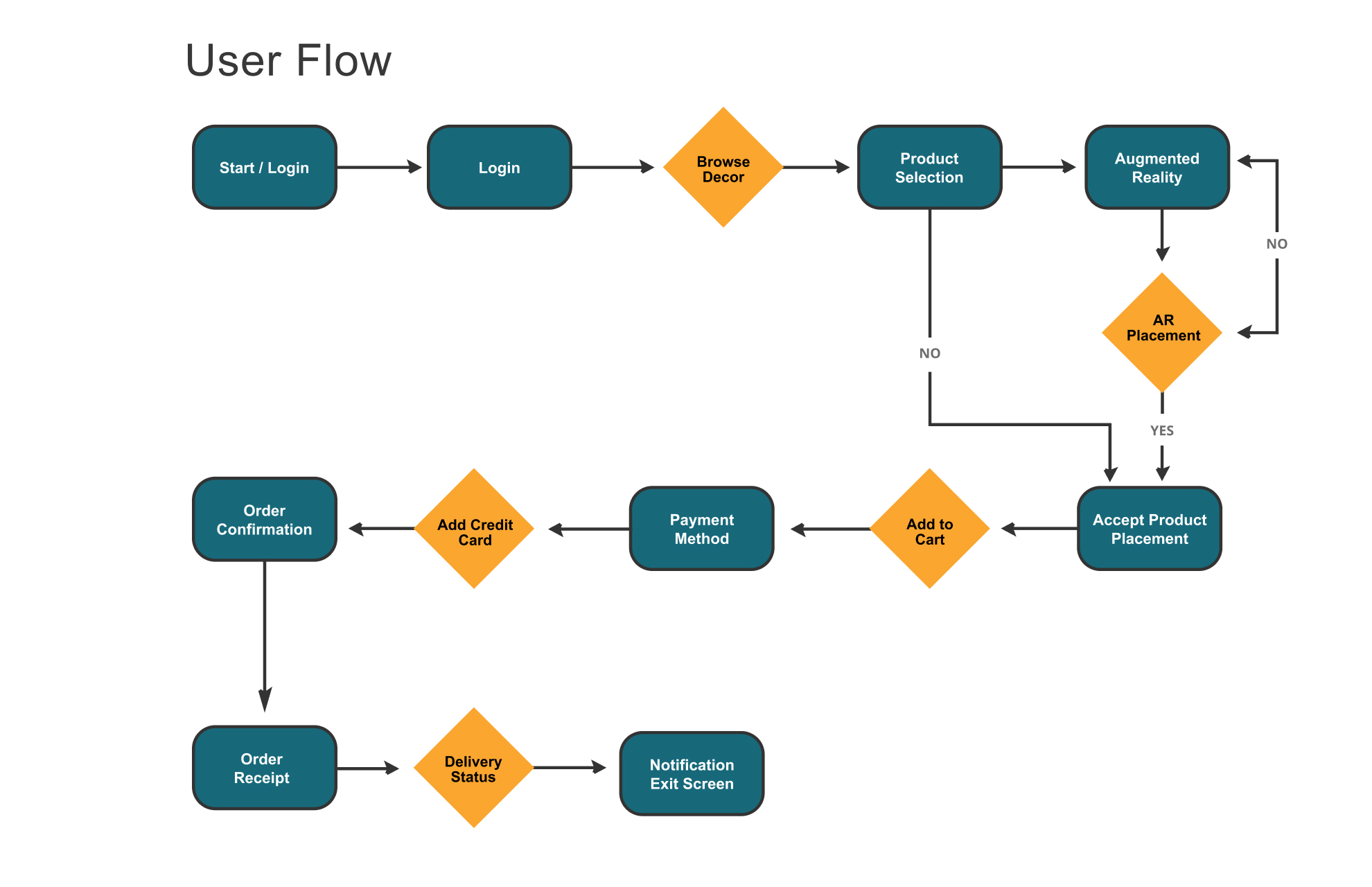
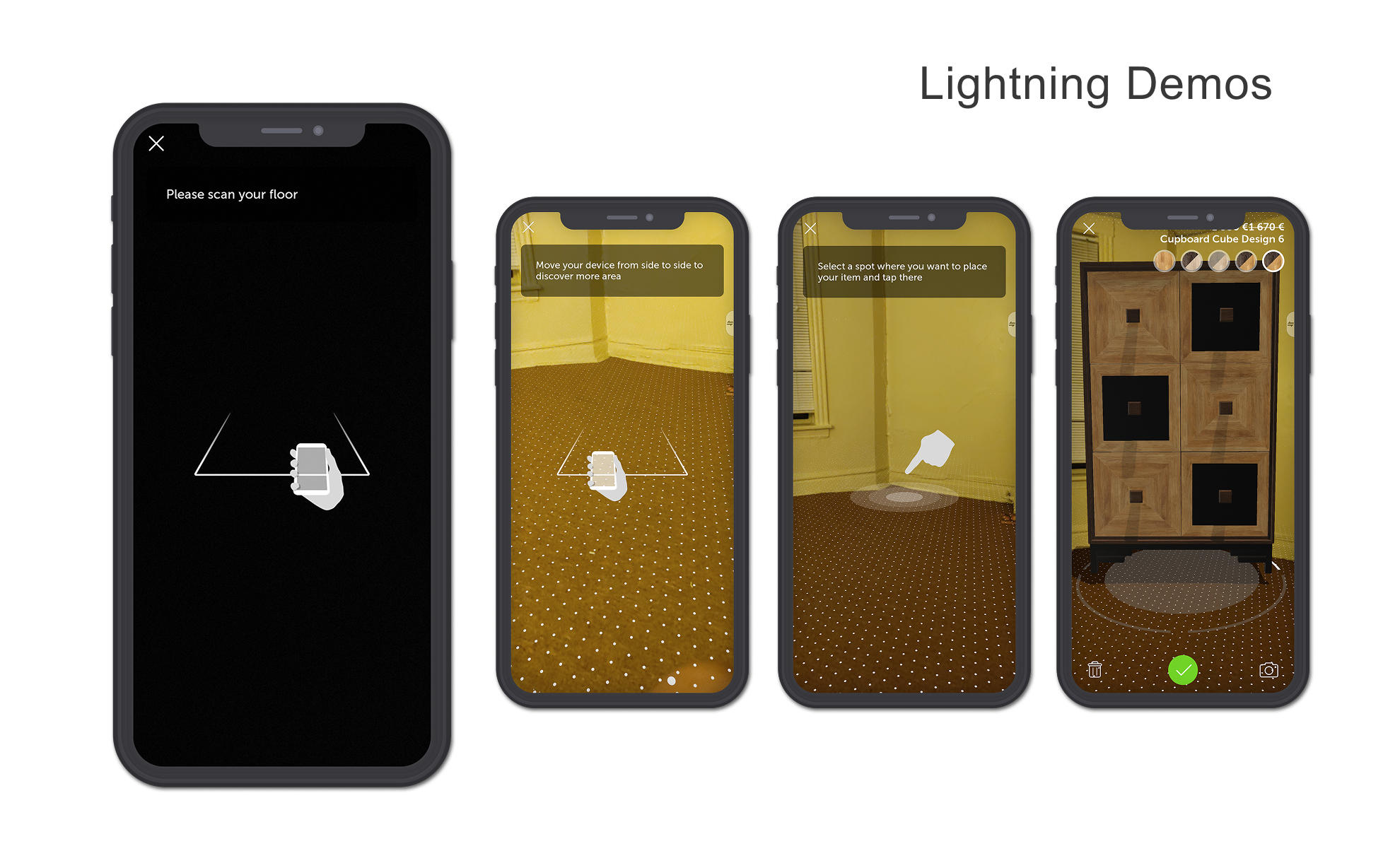
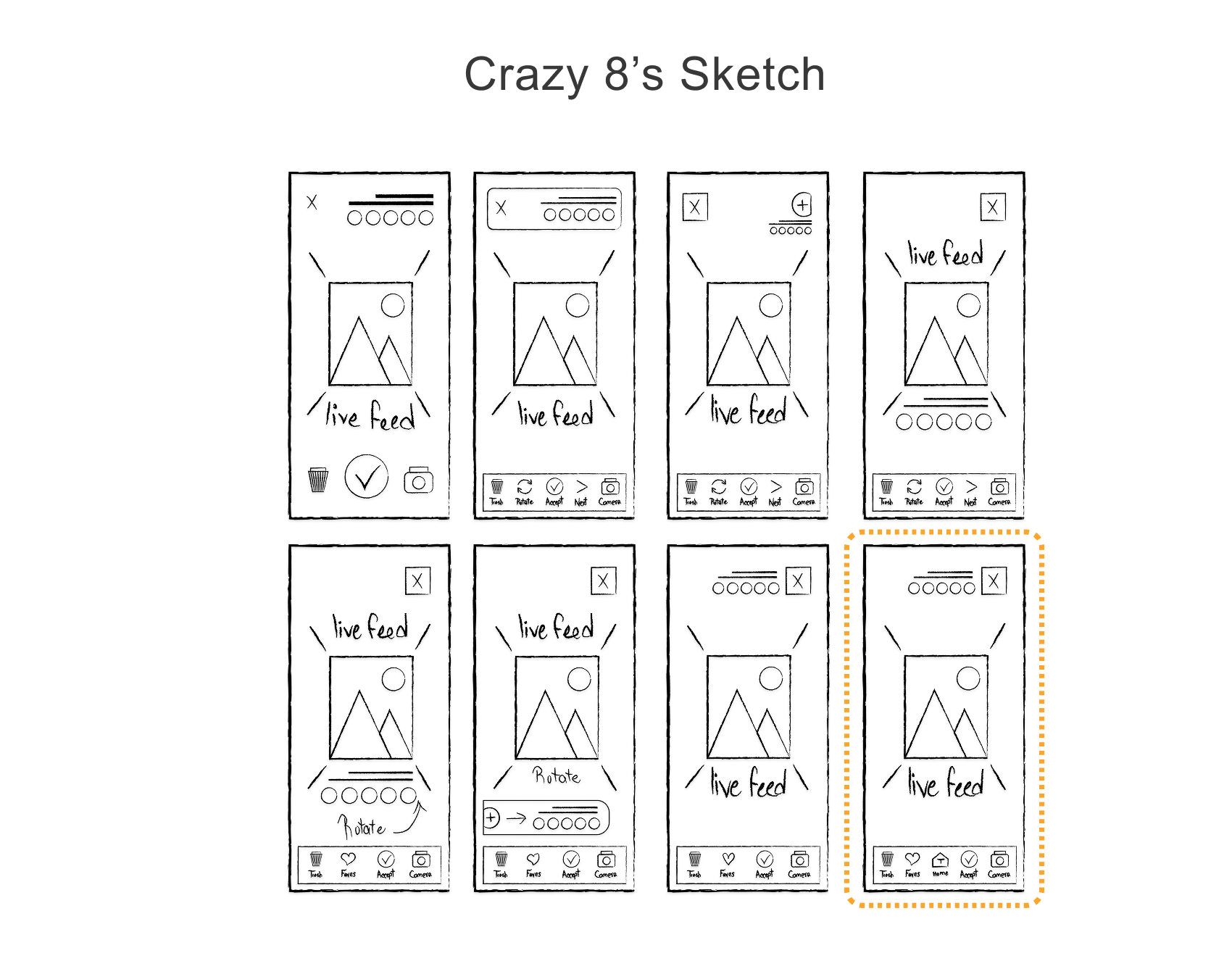
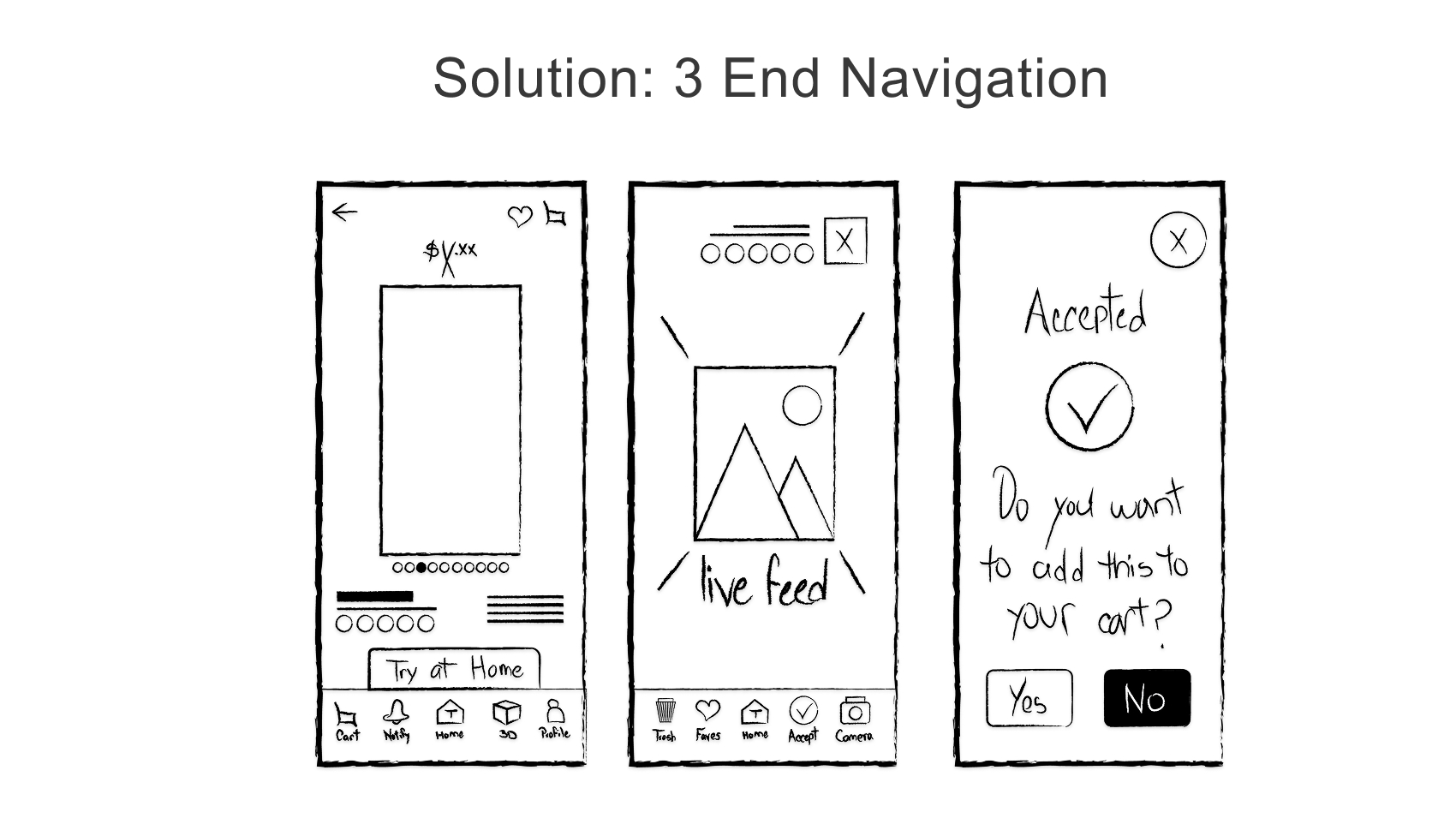
I mapped an end-to-end user flow to identify every decision Chelsea would make—from discovering décor to confidently placing it in her home. Research into augmented reality experiences and lightning demos revealed how virtual product placement could eliminate uncertainty and reduce costly purchasing mistakes. I then explored multiple interface concepts through Crazy 8's sketching, rapidly testing navigation patterns and user scenarios. These iterations led to a streamlined three-end navigation system that adapts when users enter AR mode, allowing them to focus on visualizing, comparing, and customizing décor with minimal friction.
Day 3: Storyboarding the Experience
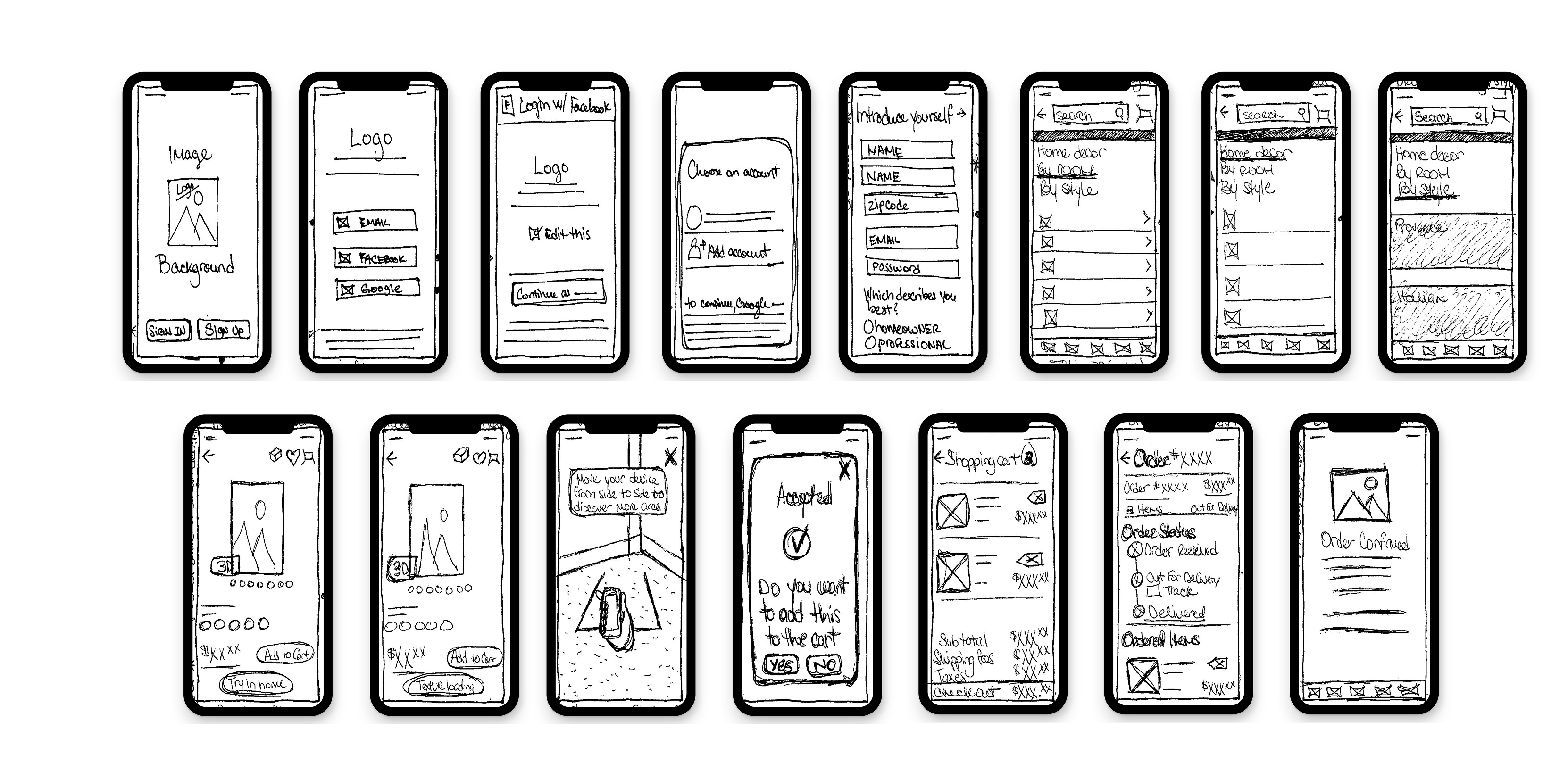
With Chelsea's user journey established, I translated key interactions into low-fidelity wireframes to validate the end-to-end experience before moving into visual design. Each storyboard focused on Chelsea's primary goal: signing in, discovering décor, visualizing products in her apartment through augmented reality, adding selected items to her cart, completing checkout, and tracking her delivery. By mapping each step, I ensured the experience remained intuitive, task-focused, and aligned with Chelsea's need for confidence, convenience, and a seamless purchasing journey.
Day 4: Developing the Design System & Prototype
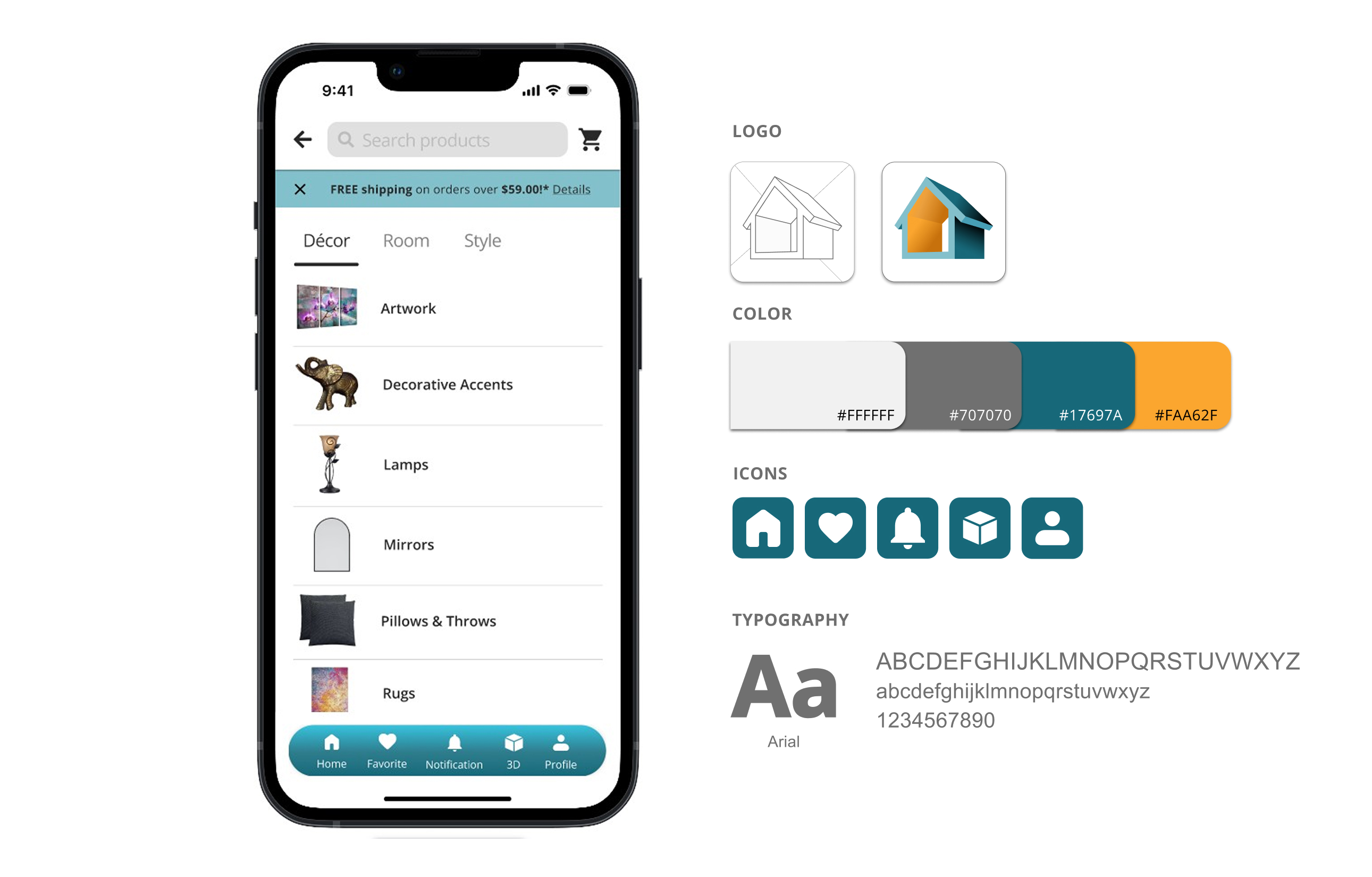
With Chelsea's user journey validated, I established a cohesive design system to create a consistent, intuitive experience across the application. The style guide defined the visual language, reusable components, typography, color palette, and navigation patterns, ensuring the interface remained welcoming and easy to navigate for all first-time users. I then translated these foundations into an interactive prototype, allowing users like Chelsea to experience Déco Maison's core value: visualizing curated furniture within their own homes through augmented reality. The prototype demonstrated how immersive design could reduce uncertainty, inspire confidence, and transform the way users shop for home décor online.
Day 5: Validating the Experience Through Usability Testing
Now that the interactive prototype is complete, I conducted usability testing to evaluate how effectively users could navigate the experience and complete their decorating journey. The primary objective was to determine whether augmented reality increased users' confidence in their purchasing decisions. During testing, 3 of the 5 participants navigated the prototype naturally, interacting with it as though it were a live application. Their ability to quickly adapt validated the intuitive navigation and immersive AR experience, while feedback from all participants identified opportunities to further refine usability before development.
Key
Outcomes
Focused Goal:
The usability tests demonstrated that Déco Maison successfully delivered its core objective: enabling users to confidently visualize home décor through augmented reality with minimal friction. Three of the five participants navigated the prototype instinctively, completing tasks with little to no guidance. Their interactions felt natural—as though using a familiar consumer application—indicating that the experience was approachable, intuitive, and engaging from the very first touchpoint.
Visual Hierarchy:
The interface's visual hierarchy effectively guided participants through each step of the journey without hesitation. Clear calls to action, consistent navigation, and purposeful content placement minimized cognitive load, allowing users to complete tasks within seconds. Throughout testing, participants showed no signs of confusion or misleading expectations, reinforcing that the interface communicated the right information at the right time and supported a seamless decision-making experience.
Improvement
Opportunities
This project reinforced that designing an effective shopping experience extends beyond creating an intuitive interface. Future iterations would benefit from deeper research into the unique challenges of online furniture shopping, including product comparison, exact room measurements taken virtually, material selection, and post-purchase confidence. Additionally, expanding my knowledge of augmented reality capabilities and industry best practices would enable me to design more feasible, immersive experiences. These insights revealed clear opportunities to strengthen both Déco Maison's product strategy and the AR experience, ensuring future versions that are better aligned with user expectations and real-world constraints.